Visit NewWorldNextWeek.com to get previous episodes in various formats to download, burn and share. And as always, stay up-to-date by subscribing to the feeds from Corbett Report here and Media Monarchy here. Thank you.
Welcome to New World Next Week - the video series from Corbett Report & Media Monarchy that covers some of the most important developments in alternative news & open source intelligence. This week:
Subscribe to NewWorldNextWeek.com to get hi-quality episodes to download, burn & share. And as always, stay up-to-date by subscribing to the feeds from Corbett Report here & Media Monarchy here. Thank you.
Air traffic controllers may begin routing commercial aircraft through the restricted airspace at 6 a.m. EST on Tuesday, Nov. 23, a day earlier than in previous years. The use of restricted airspace will end at 6 a.m. EST on Monday, Nov. 29. The busiest travel days are expected to be Tuesday, Wednesday and Sunday.
Under the agreement, DOD will release airspace off the east coast above 24,000 feet. The added capacity is expected to ease delays during one of the busiest travel periods of the year, saving time and money for passengers and airlines while reducing fuel burn.
The FAA has developed dedicated routes off the east coast to allow airlines to plan their flights through the normally restricted airspace. Normal inland routes will still be available. Weather permitting, the combination of both sets of routes is expected to ease congestion.
“The nation’s air traffic controllers are committed to upholding the safety of the system while working the most efficient airspace system in the world,” said NATCA President Paul Rinaldi. “Over the past year we’ve experienced a movement toward collaboration at all levels of the agency and we look forward to continuing to work together to improve air travel for the flying public.”
The DOD is also allowing commercial flights to use restricted airspace in other parts of the country. These include:
Airspace over the Gulf of Mexico to ease congestion for commercial aircraft flying between Florida and the Louisiana and Texas areas, as well as points beyond.
Airspace over Twentynine Palms in California to ease congestion for commercial aircraft flying to and from markets in Southern California.
Airspace over the White Sands Missile Range in New Mexico to allow for more direct routings for aircraft flying over the Southwest.
Air travelers interested in flight and airport status should visit www.fly.faa.gov for real-time updates.
cnn reports growing outrage against porno scanners from threat level: Air travelers, mark your calendar. An activist opposed to the new invasive body scanners in use at airports around the country just designated Wednesday, Nov. 24 as a National Opt-Out Day. He’s encouraging airline passengers to decline the TSA’s technological strip searches en masse on that day as a protest against the scanners, as well as the new “enhanced pat-downs” inflicted on refuseniks.
“The goal of National Opt-Out Day is to send a message to our lawmakers that we demand change,” reads the call to action at OptOutDay.com, set up by Brian Sodegren. “No naked body scanners, no government-approved groping. We have a right to privacy, and buying a plane ticket should not mean that we’re guilty until proven innocent.”
The planned protest taps a growing unease over the full-body scans. Privacy groups such as the Electronic Privacy Information Center are seeking a court order to halt the use of invasive scanners, saying the scanners are illegal and violate passenger privacy.
They also say the government has done little to ensure that images taken by the devices are not saved. The TSA has asserted that the machines cannot store pictures, but security personnel at a courthouse in Florida were found to not only have saved images but shared them among colleagues in order to humiliate one of their co-workers.
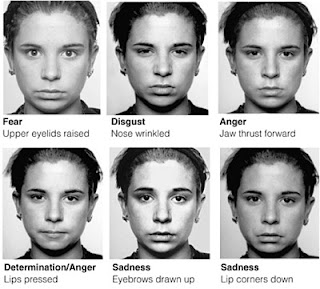
from alternet: Here's a question to ponder the next time you're taking off your shoes at airport security: Can you spot terrorists by the look on their faces? For the Transportation Security Administration (TSA), the answer is yes. For the past few years, airports across the country have been using what many call "behavioral surveillance" to weed out potential hijackers among us, by covertly examining travelers' facial expressions and body language as they go through security. Unlike those airport employees who herd us along as we remove our shoes and relinquish all liquids over three ounces (with dubious results), this new program, named "Screening Passengers by Observational Techniques," or "SPOT," is carried out by TSA employees who have been trained to monitor travelers' faces and movements. As Americans head out of town this holiday season, more than 3,000 "Behavior Detection Officers" will be at 161 airports nationwide, watching our every move.
fair use notice: this site contains copyrighted material the use of which has not always been specifically authorized by the copyright owner. we are making such material available in our efforts to advance understanding of environmental, political, human rights, economic, democracy, scientific, & social justice issues, etc. we believe this constitutes a 'fair use' of any such copyrighted material as provided for in section 107 of the US copyright law. In accordance with title 17 usc section 107, the material on this site is distributed without profit to those who have expressed a prior interest in receiving the included information for research and educational purposes.

 Welcome to New World Next Week - the video series from Corbett Report and Media Monarchy that covers some of the most important developments in open source intelligence news. This week:
 Visit NewWorldNextWeek.com to get previous episodes in various formats to download, burn and share. And as always, stay up-to-date by subscribing to the feeds from Corbett Report here and Media Monarchy here. Thank you.