The detainees, two Yemenis and a Tunisian who say they were captured outside Afghanistan, contend that they are not terrorists and are being mistakenly imprisoned at the American military prison at Bagram Air Base.
But a three-judge panel of the United States Court of Appeals for the District of Columbia ruled unanimously that the three had no right to habeas corpus hearings, in which judges would review evidence against them and could order their release. The court reasoned that Bagram was on the sovereign territory of another government and emphasized the “pragmatic obstacles” of giving hearings to detainees “in an active theater of war.”
The ruling dealt a severe blow to wider efforts by lawyers to extend a landmark 2008 Supreme Court ruling granting habeas corpus rights to prisoners at Guantánamo Bay, Cuba. A lower court judge had previously ruled that the three Bagram detainees were entitled to the same rights, although he had found that others captured in Afghanistan and held there were not.
A lawyer for the detainees, Tina Foster, said that if the precedent stood, Mr. Obama and future presidents would have a free hand to “kidnap people from other parts of the world and lock them away for the rest of their lives” without having to prove in court that their suspicions about such prisoners were accurate.
“At a time when Congressional hearings are set to call testimony from some Goldman Sachs employees, it is vital to understand how widespread that institution’s ties are to the Obama administration. This diary shows the pervasive influence of Goldman Sachs and Goldman created institutions (like the Hamilton Project embedded in the Brookings Institution), employees and influence peddlers in the Obama administration,” FDL wrote on April 27.
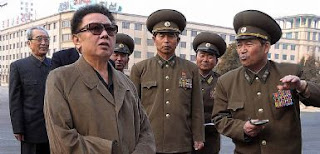
satellite proposals gain traction after north korea's launch from wsj: U.S. intelligence agencies are capitalizing on North Korea's weekend rocket launch to advance proposals to deploy two new spy satellite systems estimated to cost a total of about $10 billion, according to government and industry officials. Arguing that the U.S. faces a future gap in advanced, high-resolution imaging capabilities, Director of National Intelligence Dennis Blair and Defense Secretary Robert Gates last week asked the White House to approve plans to build a pair of large, cutting-edge spy satellites along with two smaller, less-expensive models commercially available today, these officials said. The aim is to get the simpler satellites into orbit first to maintain U.S. space surveillance efforts, and then develop and launch the more-capable follow-on constellation.
fair use notice: this site contains copyrighted material the use of which has not always been specifically authorized by the copyright owner. we are making such material available in our efforts to advance understanding of environmental, political, human rights, economic, democracy, scientific, & social justice issues, etc. we believe this constitutes a 'fair use' of any such copyrighted material as provided for in section 107 of the US copyright law. In accordance with title 17 usc section 107, the material on this site is distributed without profit to those who have expressed a prior interest in receiving the included information for research and educational purposes.

 from nytimes: A federal appeals court ruled Friday that three men who had been detained by the United States military for years without trial in Afghanistan had no recourse to American courts. The decision was a broad victory for the Obama administration in its efforts to hold terrorism suspects overseas for indefinite periods without judicial oversight.